TAC-MI One-Day Debate Workshop
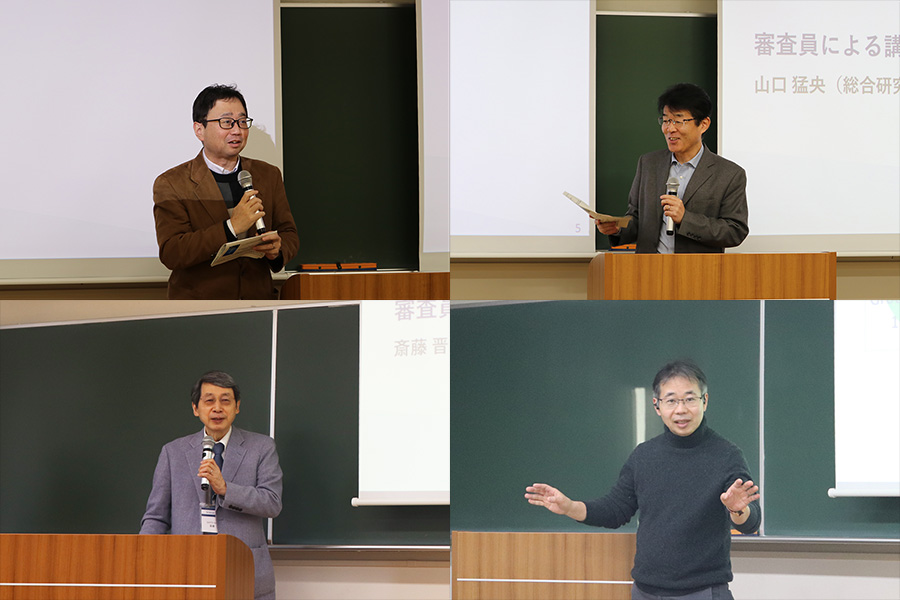
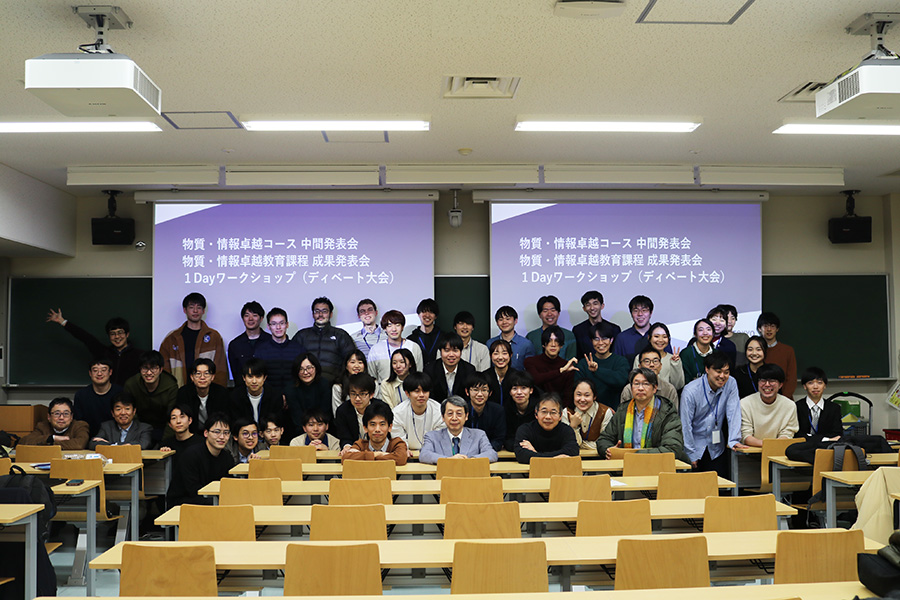
On Thursday, December 11, 2025, the Graduate Major in Materials and Information Sciences and the Academy for Convergence of Materials and Informatics (TAC-MI) held a one-day workshop (debate tournament) on the Ookayama Campus as part of the December Midterm and Final Presentation Program. The event was held for first- and second-year doctoral students enrolled in the TAC-MI Program and the Graduate Major in Materials and Information Sciences.
The primary objective of this event was to enhance participants’ logical reasoning, presentation skills, structural organization, and rebuttal abilities through structured discussions on contemporary technological challenges. To promote collaboration across academic years, mixed teams consisting of first-year (D1) and second-year (D2) doctoral students were formed.
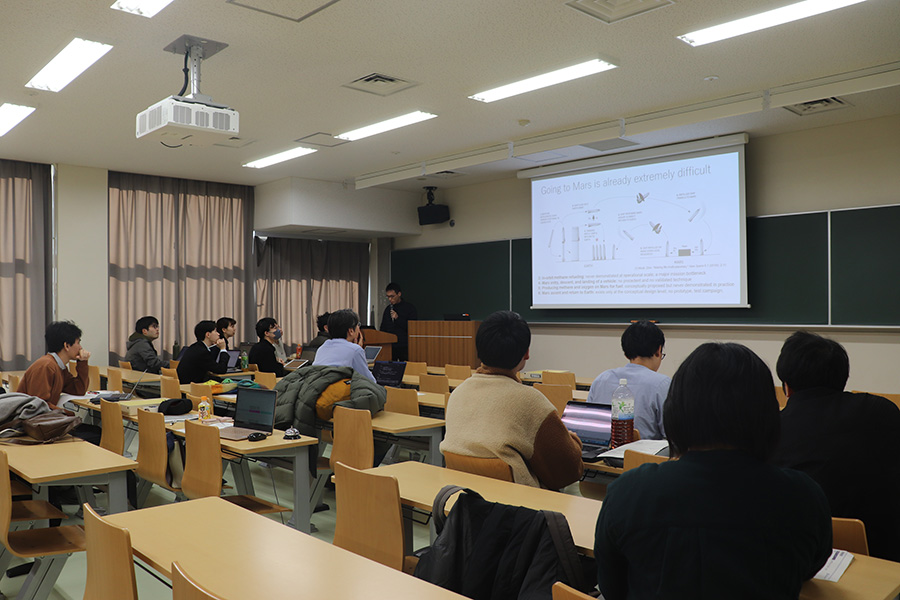
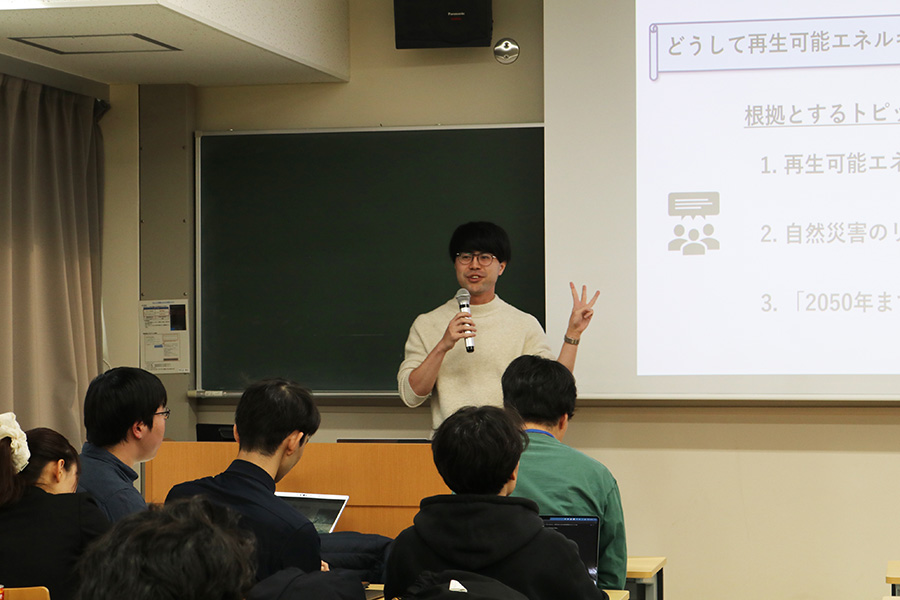
A total of eight mixed teams were divided into two classrooms and engaged in debates across two sessions—one in the morning and one in the afternoon. The morning session was conducted in Japanese, while the afternoon session was conducted in English. Each team switched sides (affirmative/negative) between the two sessions and debated against different opponents.
The themes for this year’s debates were as follows. Both topics were examined from the perspective of whether they would be technologically feasible by the year 2050:
- Topic A: “Will it be technologically feasible to relocate 1,000 people to Mars by 2050?”
- Topic B: “Will it be technologically feasible for Japan to generate 100% of its electricity from renewable energy sources by 2050?”
Prior to the event, students attended an orientation session held three weeks in advance, during which the debate topics and rules were explained. Participants subsequently prepared for the tournament through team discussions and research.
Each debate followed a structured format consisting of opening statements, a question-and-answer segment, rebuttals, and closing summaries. Evaluation was conducted through voting by faculty members and non-participating students. Assessment criteria emphasized logical coherence, clarity of expression, structural organization, and the quality of rebuttals. Notably, the evaluation focused on the substance and structure of the arguments rather than English proficiency or delivery style.
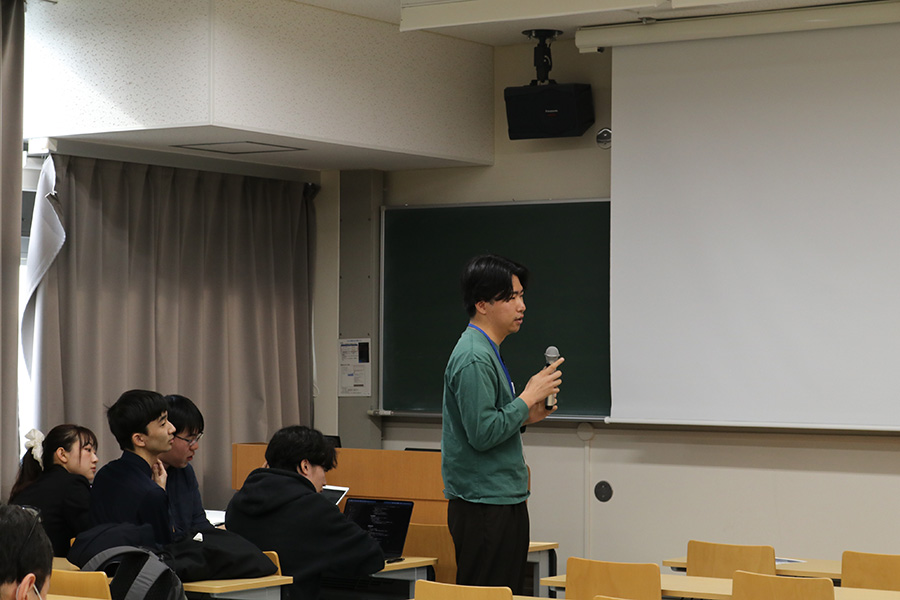
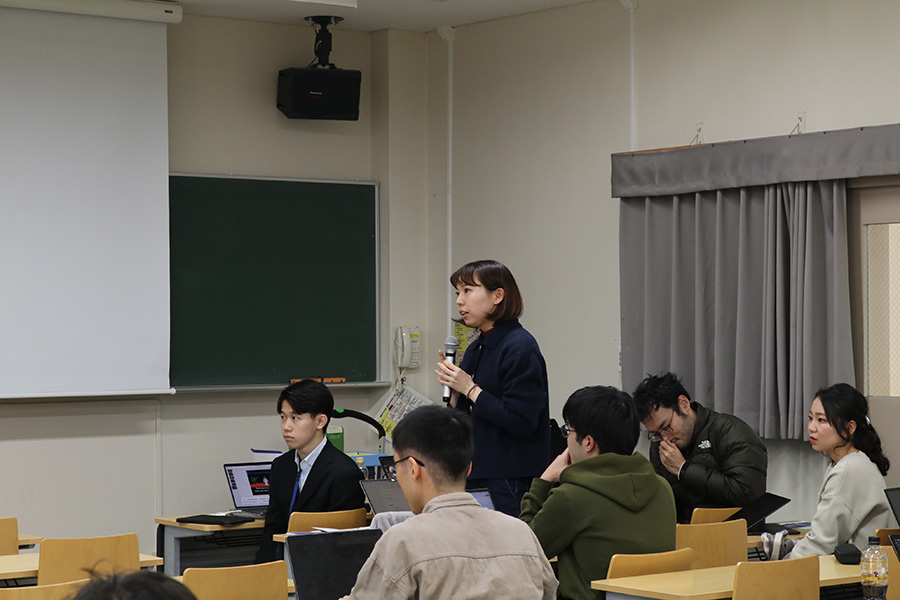
Following the morning and afternoon sessions, each venue held a feedback session and announced the results. The event concluded with team reflections and commemorative photographs. The workshop provided students with a valuable opportunity to develop multifaceted perspectives on technological issues and to deepen their understanding through engagement with differing viewpoints. Furthermore, the mixed-team format contributed to strengthening connections between students across academic years and fostering a collaborative academic environment.